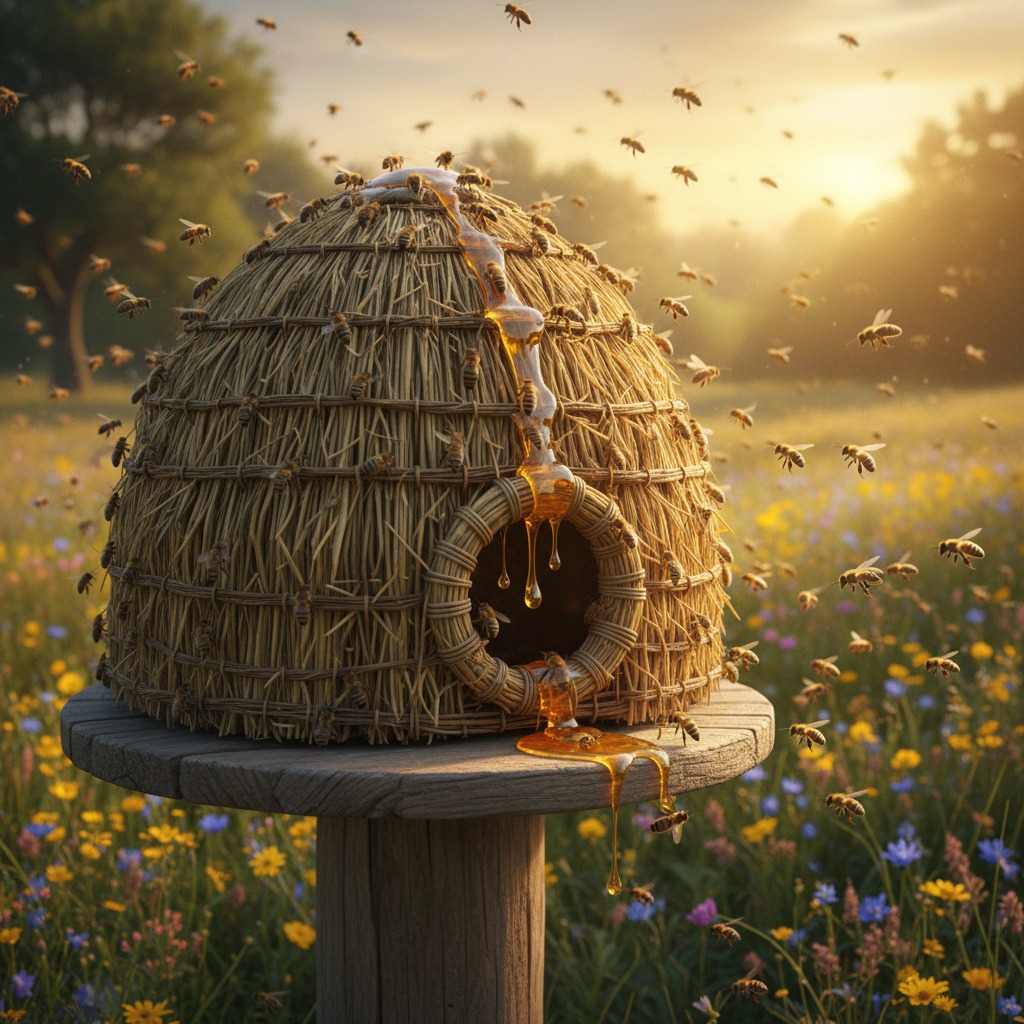
- Nectar: Collected from flower glands, nectar is a sugary liquid that serves as the colony’s primary carbohydrate source. Bees ingest nectar and use enzymes to convert it into honey. This honey provides immediate muscle energy for flying and is stored to sustain the hive through the winter.
- Pollen: As bees move from flower to flower, fine powder sticks to their bodies. They brush this into “pollen baskets” on their legs. Pollen is the colony’s main source of protein, vitamins, and fats. Worker bees mix it with honey to create “bee bread,” which is fed to growing larvae and nurse bees.
- Propolis: Often called “bee glue,” propolis is a sticky resin that bees harvest from tree buds and sap. In the hive, bees use propolis to seal cracks, smooth out rough walls, and weatherproof their home. Because it has natural antibacterial and antifungal properties, propolis also acts as an external immune system, keeping the crowded hive sanitary.
- Phenological Mismatch: Flowers may bloom days or weeks earlier than usual due to unseasonably warm winters. If honeybees emerge at their normal time, they miss the peak nectar and pollen flows, leading to colony starvation.
- Reduced Nutritional Value: Severe weather events like droughts and heatwaves stress plants. Drought-stressed plants produce significantly less nectar and lower-quality pollen, reducing the food available for foraging bees.
- Range Shifts: As geographic zones warm, some plant species migrate upward or northward. Honeybee populations cannot always adapt or relocate quickly enough to track these shifting floral resources.
- Neonicotinoids and Neurotoxicity: Neonicotinoids are a widely used class of systemic insecticides absorbed by plant tissues. When bees consume nectar or pollen from treated plants, these chemicals attack their nervous systems. It impairs their learning, memory, navigation, and flight ability, meaning foraging bees often cannot find their way back to the hive.
- Sublethal Colony Collapse: Even at low, non-lethal doses, pesticide exposure weakens a bee’s immune system. This makes the hive highly vulnerable to parasites like Varroa mites and viruses.
- Herbicides and Foraging Deserts: The heavy use of herbicides kills off “weeds” like dandelions and clover. While farmers see these plants as nuisances, they are vital early-season food sources for bees. Removing them creates agricultural monocultures that offer zero nutrition, essentially starving local bee populations.
Help Honeybees by Planting Flowers and Trees in Your Yard
Honeybees face numerous threats in today’s world, but you have the power to make a difference right in your own backyard. By planting specific flowers and trees that provide essential nutrients, you can supply bees with the vital food sources they need to survive, grow, and thrive throughout the seasons.
Why Bees Need Our Help More Than Ever
Bees rely on traveling from plant to plant to collect nectar and pollen, which are their primary sources of food. Unfortunately, urban development and large manicured lawns often replace wild, native plants with buildings, concrete, and grass, drastically reducing the natural food supply available to bees. This lack of diverse and abundant flora leaves bees struggling to find enough nourishment to sustain their colonies.
Best Flowers to Plant for Supporting Bees
Choose colorful, native flowers that bloom at various times throughout the year to provide bees with a continuous food source. Some excellent options to consider planting include:
- Coneflowers: These are easy to grow and bloom all summer long, attracting bees with their bright colors and abundant nectar.
- Lavender: Known for its pleasant fragrance to humans, lavender also offers rich nectar that bees find irresistible.
- Sunflowers: These flowers produce large amounts of heavy pollen, which is a critical protein source for bees.
Top Trees to Plant That Benefit Bees
Trees are incredibly valuable for bees because they produce thousands of blossoms at once, offering a massive, concentrated food supply that is especially important in early spring when bees first become active. Consider planting:
- Fruit Trees: Apple, pear, and cherry trees flower early in the season, providing a much-needed food source for emerging bees.
- Red Maple: This tree produces early spring pollen, offering nourishment when other plants have yet to bloom.
Simple Tips to Make Your Garden Bee-Friendly
- Avoid pesticides: Chemical sprays can be toxic and deadly to bees, so skip using harsh pesticides in your garden.
- Provide water: Place a shallow dish of water with small pebbles nearby so bees can safely drink without the risk of drowning.
By making these small but impactful changes in your yard, you can create a safe haven for honeybees. Supporting their health not only benefits the bees but also helps improve the overall environment and biodiversity in your community.